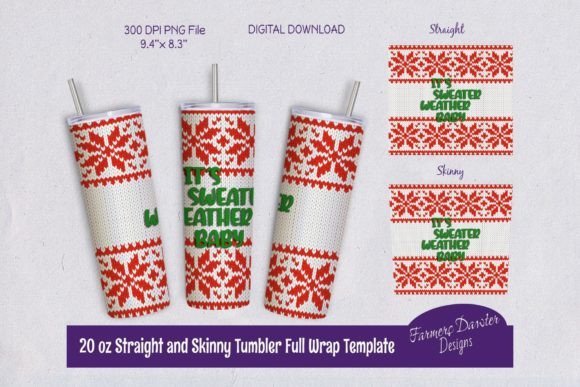
Sweater Weather Sublimation Wrap Red
First Impression: Cozy, Festive, and Quietly Detailed
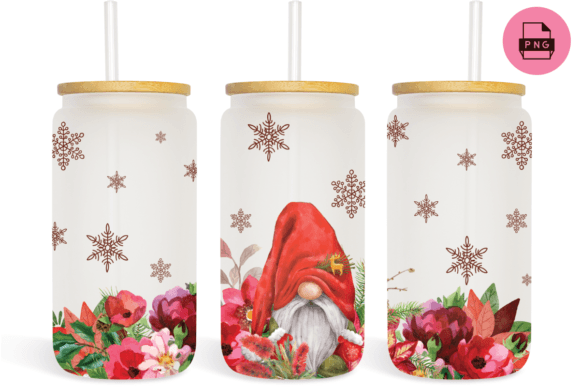
Opening Sweater Weather Sublimation Wrap Red feels like unrolling a knitted scarf on a crisp November morning—soft, nostalgic, and full of quiet intention. Though it’s labeled a sublimation wrap for tumblers, the core graphic—a red knit background with delicate snowflakes—translates surprisingly well to embroidery when adapted thoughtfully. As a designer who regularly converts digital graphics into machine embroidery designs, I immediately scanned for rhythm, spacing, and visual weight. The snowflakes aren’t fussy or overly symmetrical; they’re scattered with gentle asymmetry, like real flakes catching on wool. That organic looseness works in our favor—it avoids that “too-perfect” look that can feel sterile on handmade items.
Real-World Use: From Tote Bag to Nursery Pillow
Last week, I tested a scaled-down version of Sweater Weather Sublimation Wrap Red on a natural linen tote bag—intended for a local boutique’s holiday launch. I didn’t embroider the full wrap layout; instead, I isolated one central snowflake cluster (about 3.5" wide) and paired it with subtle running-stitch “knit lines” radiating outward. The result? A tactile, wintery accent that felt handmade—not printed, not slapped on. Customers responded strongly to its warmth and restraint. It also worked beautifully as a small embroidered patch on a baby blanket—stitched in matte red and cream threads on cotton-blend flannel. The design’s low contrast and open layout kept it legible even at 2.75", which is rare for snowflake motifs.
Where It Shines—and Where It Needs Caution
Sweater Weather Sublimation Wrap Red thrives in projects where texture and mood matter more than sharp detail: sweatshirt cuffs, tea towel corners, pillow covers, apron pockets, and nursery wall hangings. Its strength lies in suggestion—not precision. That makes it ideal for holiday embroidery, personalized gifts, and small shop product lines where consistency across batches matters less than emotional resonance.
But be mindful: the original PNG has no stitch data, so it’s not a ready-to-embroider file. You’ll need to digitize it—or work with a digitizer—to turn it into a true machine embroidery design. Don’t assume it will translate cleanly to dense fill stitches or tight satin borders without adjustment. On stretchy fabric like fleece or thin jersey, those snowflake outlines may blur unless stabilized properly. And on dark fabric? Test thread contrast first—matte burgundy or charcoal gray thread reads better than bright red on black terry cloth.
Stitching Reality Check: Density, Detail, and Fabric Respect
I ran a quick mockup on medium-weight cotton twill using a light tear-away stabilizer. At 300dpi, the PNG holds clean edges—but embroidery isn’t about pixels. When converted, the knit texture became tricky: too much fill stitch drowned the pattern; too little left gaps. My fix? Used alternating rows of short running stitch and open fill to mimic knit loops—giving movement without bulk. That’s the kind of adaptation Sweater Weather Sublimation Wrap Red invites: it’s a starting point, not a final stitch file.
For embroidered patch use, I’d recommend simplifying the snowflake count by 30–40% and widening internal clearances. Tiny interior angles (like where three snowflake arms meet) tend to pucker or skip on commercial machines—especially on curved surfaces like caps or mugs. And if you’re planning commercial embroidery, double-check whether the source file permits derivative use. Since it’s listed under Graphics and Print Templates, confirm licensing before selling stitched items or reselling digitized versions.
What This Design Says About Your Brand
Your customers don’t just buy a snowflake—they buy the feeling behind it. Sweater Weather Sublimation Wrap Red leans into soft nostalgia, not trendy minimalism. That builds trust with buyers seeking authenticity: Etsy shoppers browsing handmade baby embroidery, craft fair patrons choosing a personalized gift, or boutique owners curating cozy kitchen towels. It doesn’t scream; it hums. That subtlety elevates perceived value—especially when paired with quality thread, thoughtful placement, and honest presentation.
But it won’t carry weak execution. If your handmade product uses low-grade stabilizer or mismatched thread, the design’s charm vanishes fast. Likewise, overloading a sweatshirt with three large snowflake clusters kills balance. One well-placed motif—say, above the left chest on a charcoal crewneck—feels intentional. Three feels like clutter.
Practical Designer Notes Before You Stitch
- Test the design on scrap fabric first—especially if using textured or stretchy materials.
- Review stitch density manually: avoid solid fills in the knit background unless you want stiffness.
- Confirm hoop size compatibility—this design scales well, but tiny versions (<2") lose snowflake definition.
- Inspect small details in black-and-white mockups: does the motif read clearly on dark fabric?
- Use cut-away stabilizer for knits or fleece; tear-away works fine for stable cottons and linens.
- Check thread color contrast—not just brightness, but tone. Cream on red reads warmer than white.
- If adapting for applique design, leave 1/16" seam allowance around each snowflake for clean edges.
- Verify licensing terms before listing finished products or digital embroidery files online.
Final Thought: A Quiet Anchor in a Busy Season
Sweater Weather Sublimation Wrap Red isn’t flashy—but then, neither is a well-worn sweater. Its value is in reliability, adaptability, and mood. It fits naturally into custom apparel, holiday embroidery, and small business merchandise because it doesn’t compete with the product—it complements it. Whether you’re stitching a single tea towel for a friend or prepping 50 embroidered patches for an Etsy launch, this design gives you room to breathe, adjust, and make something quietly memorable. Just remember: it’s a seed, not a finished plant. Water it with good digitizing, respect it with smart stabilizing, and let it grow where warmth matters most.